Decisions Back On Trial.
Sometimes we put old decisions back on trial.
Not necessarily because we think we made the wrong one.
That would almost make more sense.
Sometimes we're still pretty sure.
We knew what we knew.
We saw what we saw.
We had the information we had.
We made the decision.
Verdict reached.
And then somebody questions it.
Or maybe nobody does.
Maybe we just imagine what we'd say if they did.
And suddenly, court is back in session.
We start reconstructing the whole case.
Here’s what happened.
Here’s what happened before that.
Here’s what I tried.
Here’s why that didn’t work.
Here’s what was said.
Here’s what I said.
Here are all the things you would need to know before you could possibly understand why I chose what I chose.
And sometimes, there isn't even a jury.
We're standing in an empty courtroom giving a closing argument for a case we've already decided.
Maybe there's a difference between believing you made the right decision and believing you're allowed to make a decision somebody else might not understand.
Sometimes we think that if we can just explain something well enough, everyone will eventually arrive at the same conclusion we did.
And if they don't?
Maybe we haven't explained it well enough yet.
So we keep going.
More context.
More evidence.
One more piece of the story that will surely make the whole thing make sense.
But sometimes people can hear the entire case and still reach a different verdict.
That doesn't automatically mean yours was wrong.
And sometimes we do something even harder to ourselves.
We take what happened after a decision and use it as evidence against the person who had to make it before.
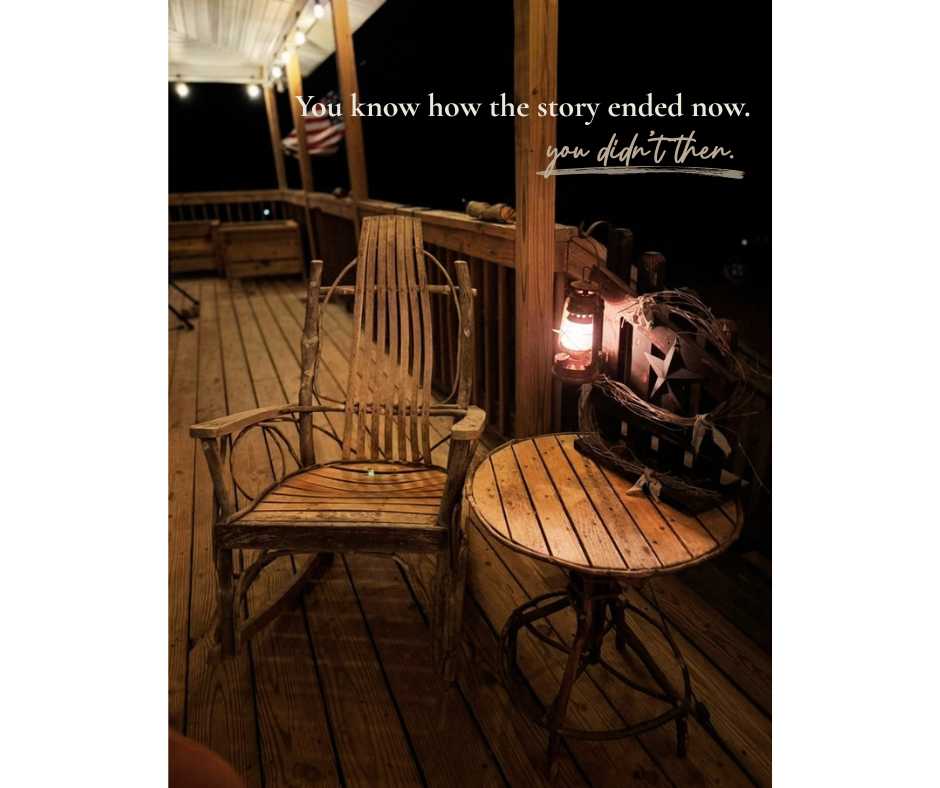
You know how the story ended now.
You didn't then.
The version of you who made that decision had whatever information was sitting in front of you at the time.
You knew what you knew about yourself then.
You carried what you could carry.
You chose from the options you could actually see.
You don't get to drag that version of yourself back into court years later, carrying evidence you didn't have then, and ask why you didn't consider it.
You couldn't.
Maybe the decision worked out.
Maybe it didn't.
Maybe you would make a different one today.
That doesn't necessarily make the old one wrong.
Sometimes the point was what happened because you chose it.
Sometimes you learned something you couldn't have learned without choosing it.
Sometimes an ending doesn't get to rewrite the whole story that came before it.
And sometimes?
You still believe the verdict was right.
Which means maybe you can stop defending it.
You don't need twelve imaginary jurors unanimously agreeing that you had sufficient evidence to live your own life.
You don't have to prove beyond a reasonable doubt that you were allowed to leave.
Or stay.
Or stop trying.
Or try again.
Or say no.
Or say yes.
Or choose something somebody else wouldn't have chosen.
There are decisions worth reconsidering.
There are apologies worth making.
There are times we learn more and realize we got something wrong.
But that's different from repeatedly putting ourselves on trial because somebody, somewhere, might have reached a different verdict.
Maybe part of learning to trust yourself is allowing some decisions to remain decided.
Even when somebody doesn't understand them.
Even when you can't explain every piece perfectly.
Even when there is still some reasonable doubt.
You made the best call you could with the evidence you had.
The verdict has been entered.
The court is adjourned.
You can go home now.